



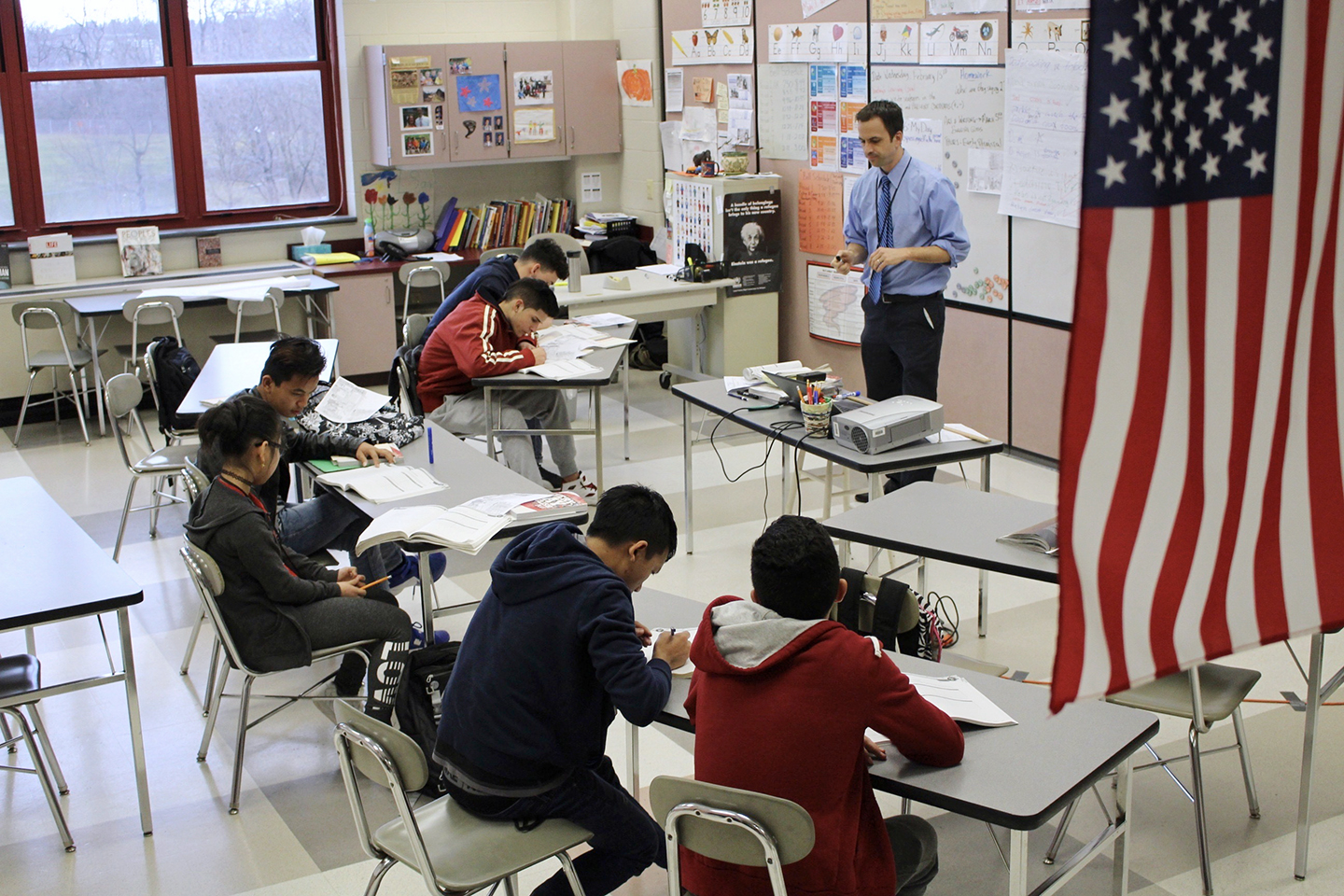
Migrant Students in America: A Complete Research Guide to Immigration Education
The United States has long been the world’s top destination for international learners. Whether you’re a family navigating K–12 public schools in a new country, a teenager dreaming about an exchange year, or a graduate student chasing a degree — understanding what it means to be one of America’s migrant students is essential before you take the first step. From accessing nursing assignment help to finding the right visa pathway, international students today have more support resources than ever before.
This guide breaks down immigration education from every angle: the numbers, the visa pathways, the high school exchange programs, and the real-world trade-offs of studying in the U.S. as a foreign national.
What Are Migrant Students? Understanding the Term
The migrant students meaning is broader than many people assume. In the American education context, the term covers several distinct groups:
- International students — foreign nationals who come to the U.S. specifically to study on F-1 or J-1 visas.
- Undocumented students — those who arrived without legal status but attend U.S. schools under federal protections (notably the Plyler v. Doe Supreme Court ruling of 1982, which guarantees K–12 access regardless of immigration status).
- Children of migrants — U.S.-born or foreign-born children of immigrant parents, often called second-generation students.
- Refugee and asylum-seeking students — individuals fleeing persecution who are resettled through federal programs and enrolled in public schools.
Understanding the migrant students meaning matters because each group faces different legal frameworks, financial realities, and academic challenges. This article focuses primarily on the first two groups — international students on visas and undocumented students pursuing higher education — while also addressing exchange programs relevant to high school students.
The Scale of Immigration Education in America: Key Numbers
The data tells a striking story about how central immigration education has become to the American academic system.
The United States hosted nearly 1.2 million international students — specifically 1,177,766 — from more than 200 places of origin during the 2024/25 academic year, a 5% increase from the previous year.
New data from the Department of Homeland Security shows that there were nearly 1.6 million foreign students in the United States in 2024, representing a 5.3 percent increase from 2023 — more than the entire population of Philadelphia.
At the K–12 level, the picture is equally significant. Over 25% of K–12 students in the U.S. have at least one immigrant parent, and more than 5.8 million college students in the U.S. are of immigrant origin — nearly a third of all students — a number that has grown steadily over the last two decades.
Among undocumented learners, the U.S. is home to more than 510,027 undocumented students, including DACA recipients, enrolled in higher education.
The economic contribution of migrant students is substantial: international students contributed $43.8 billion to the U.S. economy and supported 378,175 jobs during the 2023–2024 academic year.
Where do most migrant students come from? India remained the leading place of origin with 363,019 international students in 2024/25 — a 10% increase — while China was second with 265,919 students. California, New York, and Texas welcomed the most international students overall.
Immigration Education: Visa Pathways for Migrant Students
Immigration education policy in the U.S. is administered through several federal agencies — primarily U.S. Citizenship and Immigration Services (USCIS), the Department of State, and ICE’s Student and Exchange Visitor Program (SEVP). The two most important visa categories for migrant students are the F-1 and J-1.
The F-1 Student Visa: Academic Study
The F-1 is the standard visa for migrant students pursuing degree programs at U.S. universities, colleges, language schools, and accredited high schools.
The F-1 visa allows students to enter the United States as full-time students at an SEVP-certified college, university, seminary, conservatory, academic high school, or other academic institution. Students must be enrolled in a program that culminates in a degree, diploma, or certificate, and the school must be authorized by the U.S. government to accept foreign students.
Key F-1 requirements include:
The institution must be certified by SEVP Immigration & Customs Enforcement; the student must be enrolled full-time during the academic term; the student must demonstrate English language proficiency at the required level or be enrolled in English improvement courses; and the student must prove they have sufficient funds available to finance their studies and living expenses while in the U.S.
The step-by-step F-1 application process:
- Get accepted by a SEVP-certified institution, which then issues Form I-20.
- Pay the I-901 SEVIS fee, currently $350 for most students, which funds the SEVP program.
- Complete Form DS-160 (the Online Nonimmigrant Visa Application).
- Schedule and attend a visa interview at a U.S. Embassy or Consulate.
- Starting in fiscal year 2025, F-1 student visa applicants are also required to pay a $250 “visa integrity fee” in addition to existing SEVIS and visa application fees — this fee cannot be waived.
F-1 and M-1 student visas can be issued up to 365 days in advance of a student’s course start date, and students may arrive up to 30 days before the program start date listed on their I-20.
Once in the U.S., migrant students on F-1 visas must maintain full-time enrollment, keep their academic records in good standing, and notify their Designated School Official (DSO) of any address changes or program modifications. F-1 students and dependents have 60 days after their program end date to depart the United States.
International students who plan to enter U.S. healthcare careers should also understand professional licensing requirements, including the NCLEX for foreign nurses who want to qualify for nursing practice in the United States.
The J-1 Exchange Visitor Visa
The J-1 visa covers a wider range of participants than the F-1 — including visiting scholars, researchers, and, most relevantly for younger migrant students, high school exchange students.
J-1 visas are for participants in approved exchange visitor programs, which can include not just students but also scholars, researchers, professors, and certain specialized trainees.
One important distinction: J-1 visa students are required to return to their home countries within 30 days after their program’s end date and live there for two years before returning to the U.S. — a requirement known as the home residency rule. F-1 students do not have this same requirement attached to their visa conditions.
Exchange Student USA: High School Programs Explained
For teenagers and their families, exchange student programs usa represent one of the most accessible forms of immigration education. These programs bring international students into American households and schools for a semester or a full academic year, creating an immersive cultural experience that goes well beyond a classroom.
J-1 High School Exchange: How It Works
International students can participate in the Public High School Exchange Program and stay up to one year on a J-1 visa. Most exchange student usa high school participants are between the ages of 15 and 18. Most arrive in August and depart in June, though students from the southern hemisphere may follow a January–December schedule.
Exchange students are not permitted to reside with relatives, and students may not work part-time or full-time jobs, though they may accept occasional work like yard work or babysitting.
F-1 vs. J-1 for High School Students
The difference matters for anyone planning exchange student trips usa or a longer academic stay:
J-1 programs tend to be the least expensive option for international students when studying high school in the USA. Students on the J-1 high school program generally cannot choose their high school. If J-1 students want to continue studying in the USA after a year, they must switch to the F-1 program.
Because the J-1 visa is associated with an organization, students may attend any accredited high school that grants permission — and when a student attends a public school on a J-1 visa, they do not pay tuition. The F-1 visa, by contrast, is tied to a specific school or district, and students are required to pay tuition even at public schools. However, the vast majority of public schools do not participate in the F-1 visa program.
Exchange student in usa on the F-1 track get more flexibility — they can choose their school, potentially earn a U.S. high school diploma, and participate in competitive sports. The trade-off is cost: F-1 programs are significantly more expensive because tuition is paid directly to the school and host families typically receive monthly compensation.
Younger international learners who enjoy science can also explore biology research projects for high school students as a way to build academic experience before applying to college.
Major Student Exchange Programs USA: What to Know
Several well-established student exchange programs usa operate under State Department designation and place thousands of international teens in American homes each year. When evaluating exchange student programs usa, families should look for:
- State Department designation as a J-1 sponsor organization
- Transparent placement process with background-checked host families
- 24/7 student support and a local coordinator assigned to each student
- Clear policies on host family re-placement if conflicts arise
- Pre-departure orientation covering U.S. cultural expectations
The most well-known include programs such as AFS Intercultural Programs, CIEE (Council on International Educational Exchange), YFU (Youth For Understanding), and ICES (International Cultural Exchange Services), all of which place migrant students across all 50 U.S. states.
Students who discover an interest in reporting, campus media, or storytelling during an exchange year may also consider a journalism career path and begin building a portfolio while still in school.
Pros and Cons of Immigration Education in America
For the United States
Advantages:
- Economic contribution. As noted above, international migrant students injected $43.8 billion into the U.S. economy and supported over 378,000 jobs in 2023–24. Universities in states like California, New York, and Texas depend heavily on international tuition revenue.
- Workforce pipeline. International students comprise more than 5% of all students in higher education, and about 27% of students at the graduate level — contributing significantly to research output and STEM industries.
- Cultural and intellectual diversity. American campuses consistently rank among the most internationally diverse in the world, a quality that benefits domestic students through cross-cultural learning.
Challenges:
- Policy instability. Visa rule changes — including the 2025 shift requiring in-person interviews for most nonimmigrant visa applicants — create uncertainty for migrant students planning years in advance.
- Enrollment volatility. More than half of U.S. institutions (57%) enrolled fewer international students than in 2024, while 29% registered an increase and 14% reported stable numbers.
- Brain drain concerns. When top international graduates remain in the U.S. through OPT and H-1B visas, sending countries sometimes lose their most skilled graduates.
For the Migrant Students Themselves
Advantages:
- Access to globally recognized degrees and research institutions.
- English language immersion that accelerates proficiency.
- Cultural exposure and international professional networks.
- Potential pathways to post-graduation work through OPT (up to 12 months, or 36 months for STEM graduates).
Challenges:
- Financial burden. International students generally do not qualify for federal financial aid and must demonstrate funding upfront, which can be prohibitive for families from lower-income countries.
- Legal complexity. Maintaining valid F-1 or J-1 status requires strict adherence to enrollment requirements, employment restrictions, and travel protocols — with violations carrying serious consequences.
- Mental health and isolation. Research consistently shows that migrant students face elevated rates of anxiety, loneliness, and culture shock, particularly in the first semester.
- Academic pressure. Writing-intensive coursework in a second language is one of the most reported challenges — from undergraduate essays to graduate dissertations — making academic support services a critical resource.
For students pursuing healthcare degrees, researching nursing scholarships for international students can help reduce some of the financial pressure associated with tuition and living costs.
Academic Challenges Migrant Students Face — and How to Address Them
For many migrant students, the biggest shock isn’t the visa process or the culture gap — it’s the academic writing demands of the American university system. Essay-heavy courses, research papers, citation styles like APA and MLA, and fast-paced deadlines in a second language create genuine barriers to academic success.
This is where understanding available support resources matters. Most U.S. universities offer writing centers, ESL tutoring, and academic coaching specifically for international and immigrant-background students. Online academic support services have also become increasingly valuable for migrant students navigating coursework while adapting to a new environment.
Immigration education is not just about getting into a program — it’s about succeeding once you’re there. Planning for academic support is as important as planning for your visa.
When writing-heavy coursework becomes difficult to manage, a nursing essay writing service can provide additional academic support for students balancing language adjustment, deadlines, and demanding nursing subjects.
Key Resources and References
The following sources informed this research and are recommended for further reading:
- U.S. Department of State — Student Visa Information: travel.state.gov
- ICE Study in the States: studyinthestates.dhs.gov
- USCIS — Students and Employment: uscis.gov
- IIE Open Doors 2025 Report: opendoorsdata.org
- Higher Ed Immigration Portal — National Data: higheredimmigrationportal.org
- Presidents’ Alliance — Immigrant-Origin Students in Higher Education (2024): presidentsalliance.org
- Migration Policy Institute — International Students in the United States: migrationpolicy.org
- Smithsonian Institution — Immigration Education Resources: smithsoniansecondopinion.org
- J-1 Visa Secondary School Student Program: j1visa.state.gov
- ICES USA — J-1 Public High School Exchange Program: icesusa.org
This article is intended for informational and educational purposes. Visa rules and immigration policies are subject to change. Always consult the official U.S. Department of State and USCIS resources, or a licensed immigration attorney, for guidance specific to your situation.